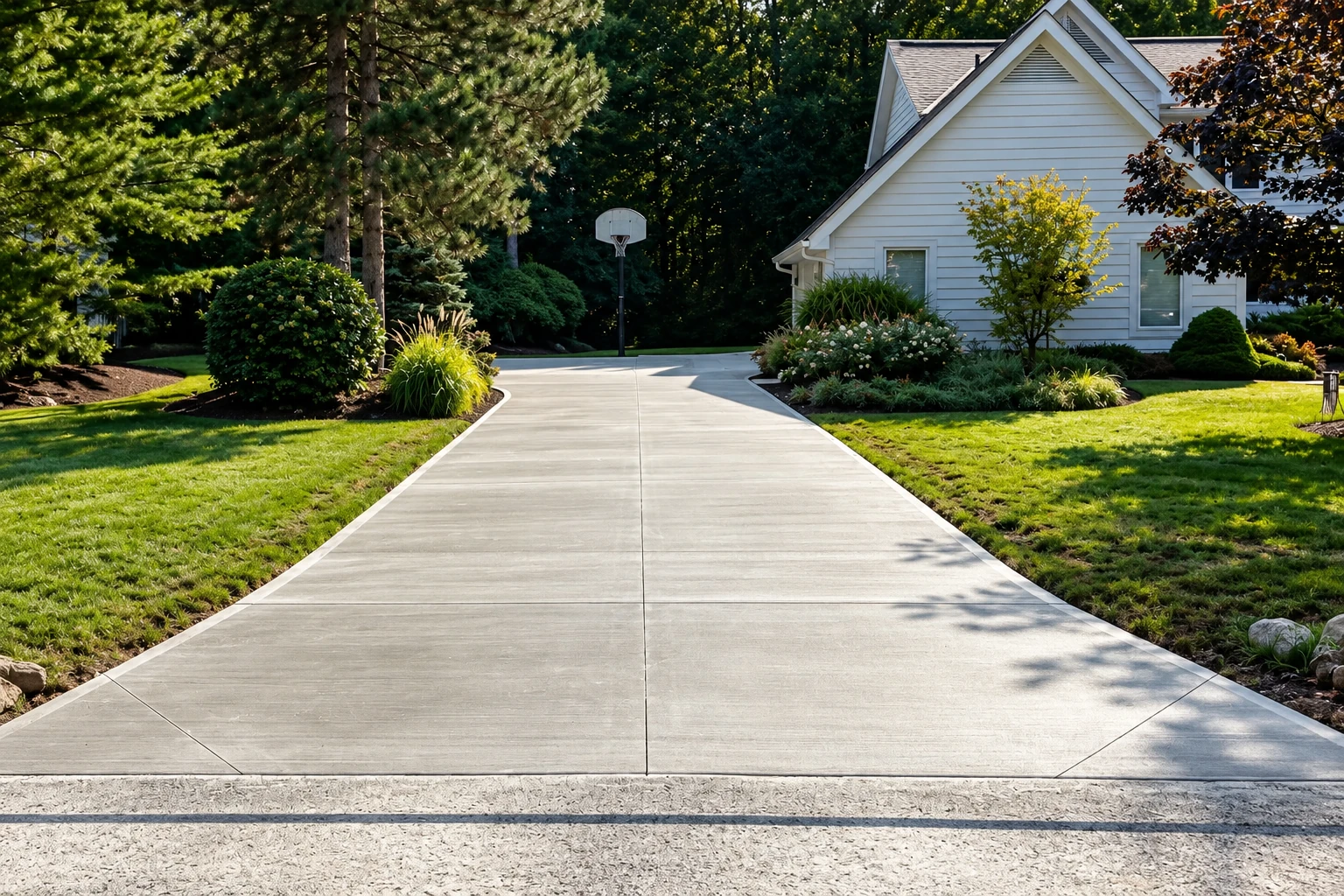
Concrete parking lot building in Fremont CA - a lot built for the trucks it carries
Cracked panels, standing water and broken edges where trucks turn usually trace back to the base and joints, so we get those right first.
- Licensed and insured.
- Free on-site estimates.
- We reply within 1 business day.
What does it take to build a concrete parking lot in Fremont?
Concrete parking lot building in Fremont, CA, means forming, pouring and finishing pavement concrete over a prepared base, with joints cut to control where it cracks, so the lot holds up under the cars and trucks that use it every day.
Most owners who call us have a gravel lot that ruts and puddles, old pavement that's breaking up, or a new building that needs a lot before it can open. The price mostly turns on the lot's size, how heavy the traffic is, how much digging and base work the ground needs, whether old pavement has to come out, and what the drainage plan calls for. The schedule turns on permits, weather and curing, the wait while fresh concrete gains strength before cars and then trucks go on it. Your written estimate spells out what's included for your lot, so you can see where the money goes.
How do you know a parking lot needs rebuilding?
Cracks where trucks turn
You'll see broken corners and spiderweb cracks in the lanes trucks use, usually where they turn or stop to unload. It usually means the pavement wasn't built for that weight, and once pieces break loose, water gets under them and the damage spreads faster every rainy season.
Panels that don't line up
One edge sits higher than the next at a joint, enough to catch a cart wheel or a toe. That usually means the ground under one panel is softer or wetter than the rest, or the joint isn't sharing the load, and every truck that crosses it pushes the low side down further.
Water standing after rain
Puddles that sit for hours mean the slope or the drains aren't doing their job. Water left on the lot soaks into cracks and the ground underneath, softening the base the pavement depends on, and it's a slip risk for anyone walking to the door.
How we handle concrete parking lot building
Before I plan anything, I ask how many trucks use the lot, because delivery and garbage trucks decide the thickness, the joint layout and whether steel goes in, and we go over the stormwater side with you at the same time. Then our crew digs out to firm ground, replaces soft spots and packs the subgrade, what the slab sits on, so it's even from one end to the other. We set forms and grades so water runs to the drains and away from the building, pour early in the day before the heat can weaken the top, and give it a broom finish, a light texture that keeps tires and shoes from slipping. We cut control joints, straight saw cuts that give the slab a planned place to crack, as soon as the concrete can take the saw, then keep it damp while it cures. If the budget gets tight, I'll pull back on finish details before I'll cut base work, because nobody sees the base on day one and it's what decides whether the lot stays flat.
A lot usually comes with other concrete around it. Light poles, sign posts and carport columns sit on concrete footings, and we pour those as part of the same plan so they line up with the pavement. If the building at the edge of the lot has settled, foundation raising can bring it back up before we set the new grade to it.
Standard pavement with a broom finish
This suits most lots, from a few parking stalls to lanes that carry delivery trucks, because we size the thickness and joints to the traffic. It's the simplest surface to sweep, stripe and keep up.
Pervious concrete
This suits lots where handling rainwater is the hard part, because the slab lets water soak through instead of running off. It needs regular sweeping so grit doesn't clog it, and the stormwater question below covers why owners here look at it.
Get a written estimate for your parking lot
Send your lot size and roughly how many trucks use it, and we'll reply within one business day. I'll come out for a free on-site look and write an estimate that spells out what's included, with no obligation.
- Based in
- Fremont, CA 94536
- Hours
- Mon–Fri: 6 AM–11 PM, Sat–Sun: 7 AM–11 PM
What happens when you call us about a Fremont parking lot?
Here's how a parking lot job runs with us, from your first call to the final walk-through, and who you'll be dealing with at each step.
Tell us about your lot
Call (341) 201-0945 or use the form and tell us the lot's size, what's on it now and roughly how many trucks use it. We'll set a time for me to come out.
I look at the site
I walk the lot with you, check where the water goes and how the lot meets the street and the building, and answer whatever you ask. You get a written estimate that spells out what's included, so you know what you're paying for before you decide.
We pull permits and pour
Once you say go, we take care of the permits and inspections, and our crew does the work with me on site. On a Fremont grading permit, the city asks for a call to USA Underground Alert two working days before digging and notice to the inspector at least one working day before work starts and again when it's done, and we handle both.
Walk the finished lot
Once the concrete has cured, we walk the lot together, look over the joints and drainage, and leave the site clean and the street the way we found it. I'll tell you when it's ready for cars and when it's ready for trucks.
Why Fremont property owners call Frontier Fremont Concrete Company for parking lots
The owner writes your estimate
I'm the one who comes out to look at your lot and write the estimate, and once work starts, our crew does it with me on site running the job. The person who priced it is the one making sure it gets built that way.
Trained on city street crews
I learned concrete pouring sidewalks, curbs and driveway approaches for a city crew, working next to the inspectors, and started this business in Fremont in 2020. A parking lot has to meet the street cleanly and pass inspection, and that's the work I came up doing.
Licensed and insured in California
We're licensed and insured. California's concrete contractor license class covers pavement and flat concrete work like a parking lot, so it's fair to ask anyone bidding your lot what license they carry.
Stormwater worked out up front
We go through the drainage and stormwater side of your lot before the estimate is final, because in Fremont it can change the slope, the drains and even the surface you pick. Sorting it out after the plans are set usually means paying for the same work twice.
If a lot is in your plans, tell us about it and I'll come out and look at the site with you.
Grading permits and parking lot work in Fremont
A new parking lot in Fremont often needs the city's sign-off before we dig. Grading a commercial or industrial property before a building permit is issued may require a grading permit, and the city's Permit Center is where owners get help with construction permits. Whether your lot needs one depends on the site and the plans, so if it's unclear, we check with the city for your address before work starts. When it does, we pull the permit, set up the inspections and meet the inspector on site. A city grading permit doesn't cover permits other agencies may require, so we ask which ones apply to your property early, while there's still time to plan for them.
The lots we're called to are usually behind small shops, offices, churches and apartment buildings, where delivery trucks share the pavement with cars, and we see the same mix on jobs in Newark and Union City. We're based in Fremont and work in many of the cities around it.
Questions about concrete parking lots in Fremont
How much does a concrete parking lot cost in Fremont?
The cost of a concrete parking lot comes down to its size, the traffic it has to carry and how much ground work the site needs. Truck traffic means thicker concrete and sometimes steel at the joints, and tearing out old pavement, fixing soft ground or adding the drainage the city asks for all add to it. I'll come out and give you a written estimate that spells out what's included.
How long does a concrete parking lot last?
A concrete lot designed and built for parking use can give satisfactory service for many years with little maintenance. That's why matching the design to how the lot actually gets used is what keeps it economical over time, more than anything done to it later. On our side, it's satisfaction guaranteed on every job.
What causes cracks in a new concrete parking lot?
Concrete shrinks as it dries and moves with the ground, so it cracks, and the joints we cut are there to make those cracks happen in straight lines where we chose. Cracks in the wrong places usually come from joints cut late or ground that changes from spot to spot. One concrete industry brochure on parking lots says the base doesn't need to be a thick layer, but the soil under it should match in type, moisture and density, with odd patches dug out and replaced to match the rest.
Does a concrete parking lot need steel reinforcement?
Usually not across the whole lot. The same brochure, summing up a concrete design guide, says rebar or mesh spread through the slab isn't typically needed when the joints are close enough to keep cracks between them, and that shorter panels without it typically cost less. Where a soil problem under the slab can't be fixed, it says steel or fiber can hold cracked pieces together, and I'll tell you if your site looks like one of those.
How do I plan a concrete parking lot for truck traffic?
Start with a count of the trucks, because heavy traffic changes how the joints have to be built. In one pavement webinar, presenters add dowel bars, short steel bars that carry the load from one panel to the next, at joints across the lanes once traffic reaches about 100 trucks a day, since the grip of the stone at the joint can't carry that load alone. A rough daily count from you is enough to plan around.
What stormwater rules apply to a new parking lot in Fremont?
Fremont puts stormwater conditions on development projects, covering site design, keeping pollutants out of runoff and treating the water, with controls on how fast it leaves larger sites. Projects with stormwater measures also need an operation and maintenance agreement and manual with the city, which means you'll be keeping those measures working after we leave. Pervious concrete cuts runoff from the pavement, which can mean a smaller separate retention pond, sometimes none, and smaller storm sewers.
Related concrete work around a parking lot
Concrete footings
A lot's light standards, bollards and edge walls stand on concrete footings, and getting them deep and square keeps them plumb for as long as the pavement lasts.
Foundation raising
If the building beside your lot has sunk and its doors stick, raising it first lets the new pavement meet each entrance at the right height.
Service areas around our Fremont base
Frontier Fremont Concrete Company is based in Fremont, CA, and the 12 cities below, Hayward and Milpitas among them, each have their own page. If your city isn't listed, ask us.
Send your lot size and truck count
With those two numbers in hand, the first site visit can settle thickness, joints and drainage instead of needing a second trip, so call (341) 201-0945 or use the form.